
Hotter temperatures, a slower market—it’s not all bad news, though. The government is finally showing a little common sense for once. Am I allowed to say that?
Fraser Valley Market Data Overview
Let’s start with the market data, and then I’ll dig deeper into what I’m seeing out there.
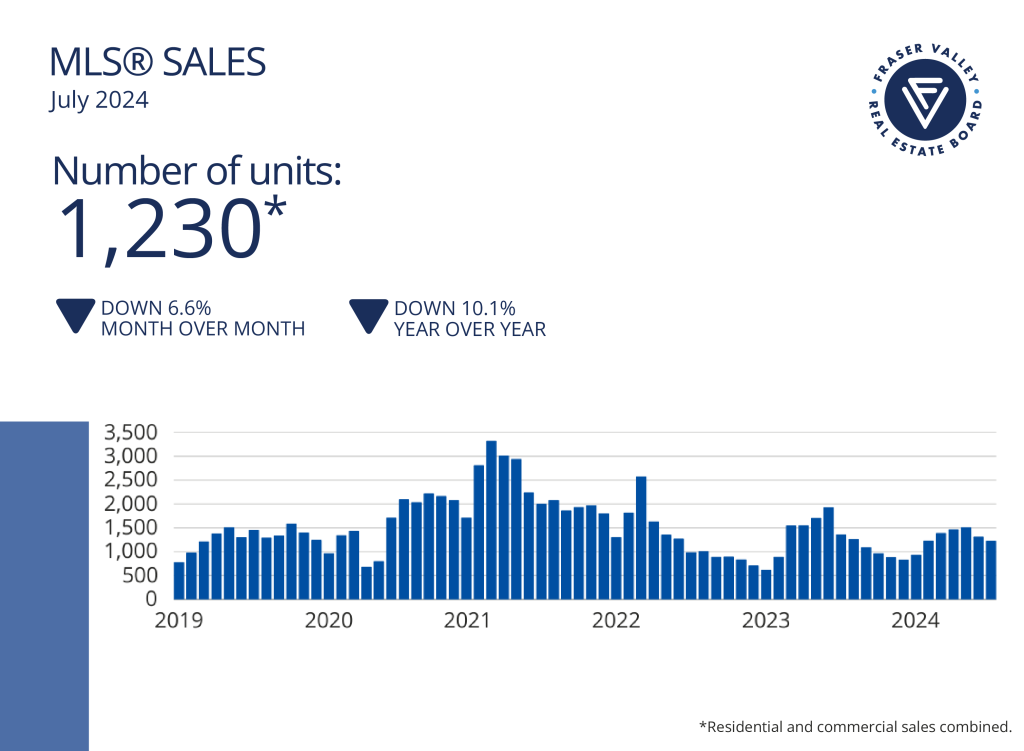
The Fraser Valley market is slowly shifting toward buyer territory with sluggish seasonally-adjusted sales and a continued rise in inventory. In July, the Fraser Valley Real Estate Board recorded 1,230 sales, which is down by 7% from last month and 26% below the 10-year seasonal average.
Inventory levels reached a 10-year seasonally adjusted high with active listings at 8,731, up 5% from June and 41% higher than July 2023. New listings were relatively flat in July, with a slight decrease of less than half a percent from June, totaling 3,412. The sales-to-active listings ratio stands at 14%, indicating balanced market conditions. However, this varies by market and housing type.
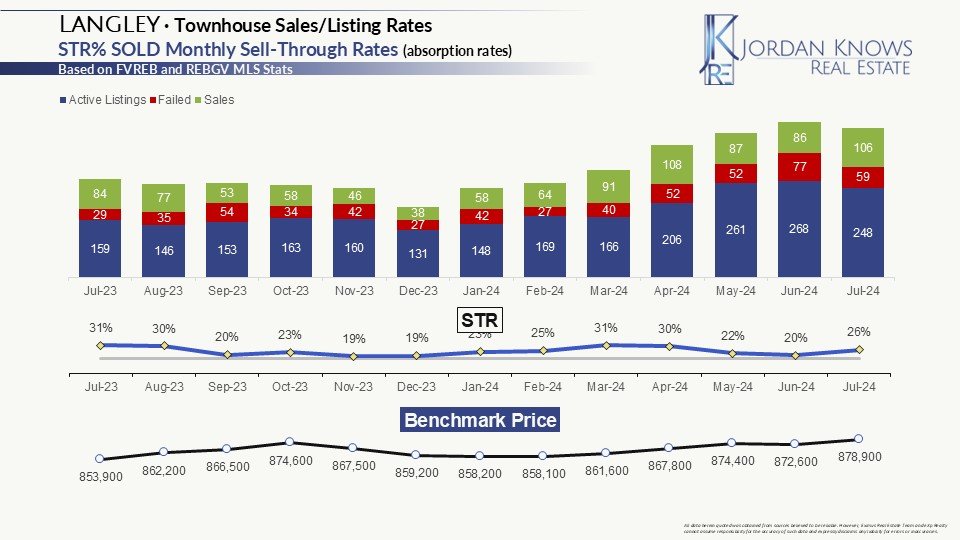
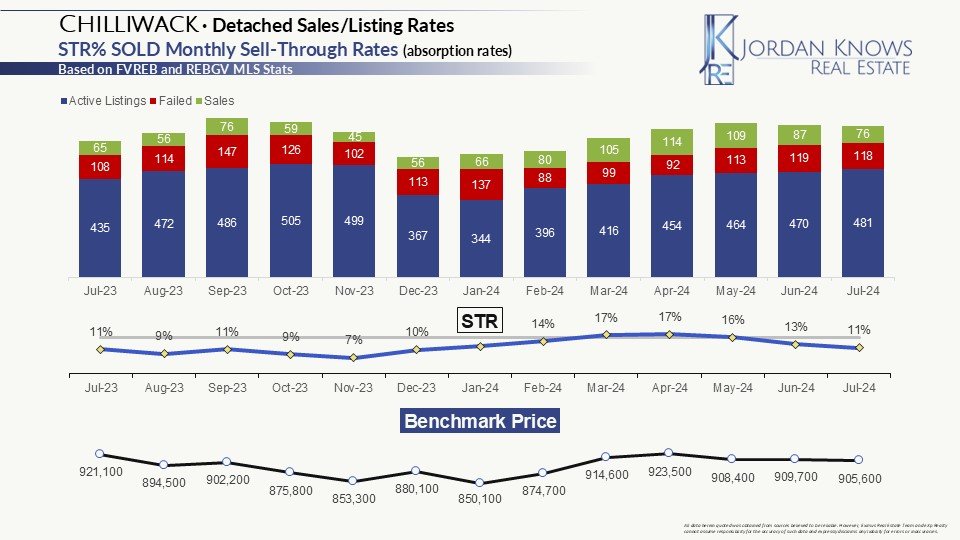
For instance, Langley townhomes are performing well, with the sell-through ratio and prices trending toward a seller’s market. On the other hand, Chilliwack detached homes are experiencing a dip in pricing, with the sell-through ratio trending deeper into buyer’s market territory.
Understanding these market nuances is crucial for planning your strategies and making informed decisions, even within neighboring areas.
Across the Fraser Valley in July, the average days to sell a single-family detached home was 31 days. Townhomes took an average of 25 days to sell, while condos averaged 28 days on the market.
HPI Benchmark Price Activity
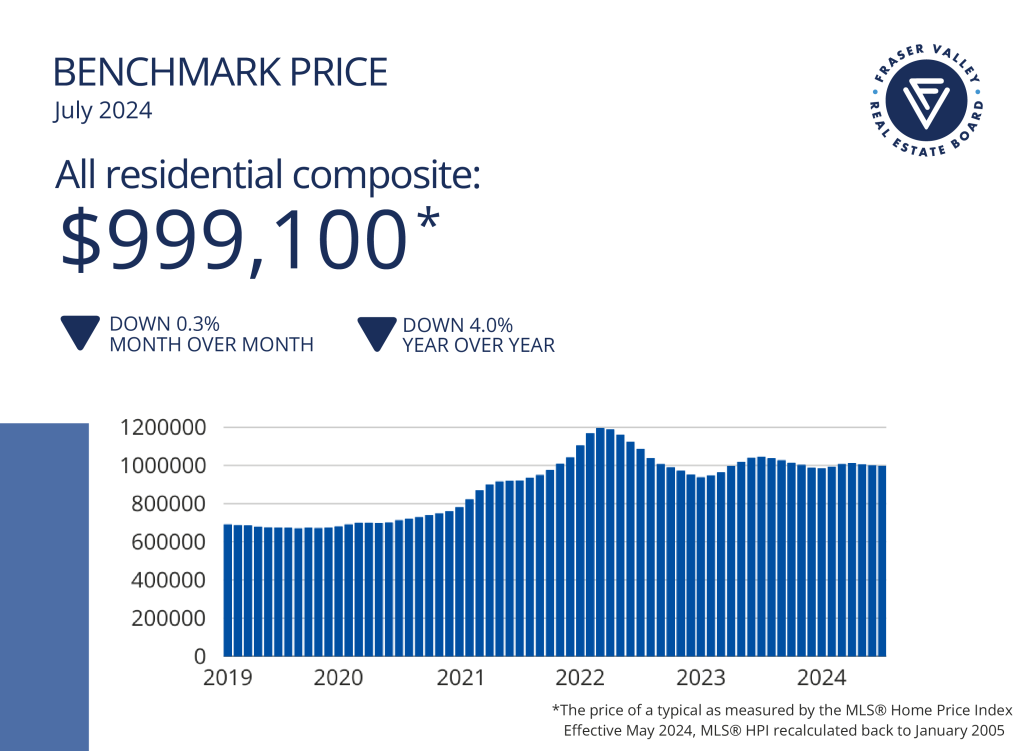
- Single-Family Detached: Increased by 0.1% month-over-month to $1,529,600, but down 0.5% compared to July 2023.
- Townhomes: Fell by 0.3% month-over-month to $848,800, a 0.1% decrease compared to July 2023.
- Apartments: Remained flat at $551,000, though this represents a 0.3% decrease compared to July 2023.
Interest Rates and Economic Trends
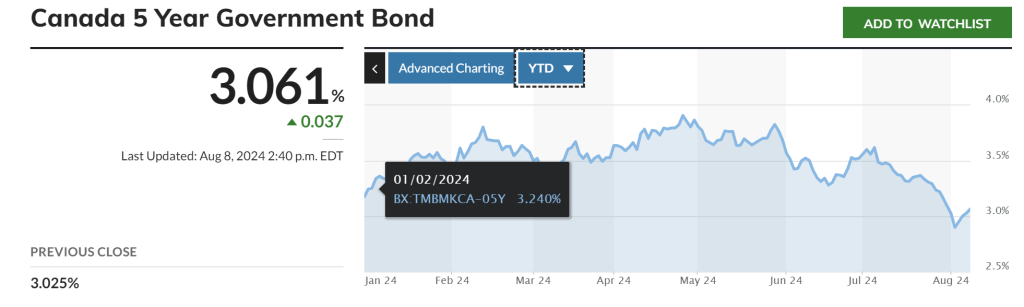
Bond yields are trending down, hitting an annual low this month. Many expect lenders to begin lowering rates in response, which could significantly impact the market. Most buyers are currently opting for fixed-rate mortgages, as they are safer and cheaper than variable rates, despite recent rate drops.
You might be thinking, “Awesome, fixed rates are going to go down, so prices will jump, right?” Maybe, but I’d advise patience. Lower rates are a response to weaker economic figures, and we’re only now seeing the downstream effects of the inflation-recession see-saw we’ve been on. With more inventory and slow sales, there’s more downward pressure on prices than upward.
As we head into the busier fall season, healthy fixed-rate drops could spur activity, but my guess is that we’ll continue trending sideways, with a slight downward bias in the foreseeable future. There’s a lot of inventory to work through.
Seller and Buyer Dynamics
Failed listings have decreased slightly, indicating that sellers are currently entrenched in their pricing, which is typical for this time of year. They’re likely waiting for the fall season and hoping for buyers to jump in. Historically, this is how trends move. I expect a wave of relists and price adjustments as the school year starts.
If you’re planning to list, consider pricing effectively and hitting the market just before September to stay ahead of the competition. Buyers, there are opportunities to negotiate on those stale listings today.
We’re in a bit of a staring contest between buyers and sellers. My bet is sellers will blink first, as there are just more of them, and buyers can always say “no thanks” and look elsewhere. It all comes down to understanding your value proposition. Special or “A” properties won’t need to blink.
Government Changes and Market Impact
In other news, housing starts are down 0.4% month-over-month and 13% in Vancouver due to fewer multi-unit starts. The BC government has finally shown some common sense by slightly walking back changes to the Residential Tenancy Act (RTA) regarding personal use evictions.
As of July 18th, the notice period for personal use evictions was extended from 2 months to 4 months. This caused significant issues for real estate transactions, including expiring rate holds and potential reappraisals. Thankfully, the government has retroactively adjusted this rule. Going forward, current property owners must still wait 4 months, but new owners only need to give 3 months’ notice. While this is still longer than the average possession timeline, it’s a step in the right direction. However, it feels a bit like telecom companies offering better rates to new customers while existing customers get left behind—it just feels wrong.
What’s Your Take?
What do you think? Will the rate drops jumpstart the fall market, or will we continue to trend slowly sideways? Was the change from 4 months to 3 months on evictions reasonable? I’d love to hear from you!
As always, if you have any questions about Fraser Valley real estate, whether buying, selling, or investing, give me a call.
Thanks for reading!
If you’d like to explore individual market and housing type stats in more detail, check out the market area page.


