
Prices Back to Pandemic-Era Levels as Inventory Builds and Buyers Stay Cautious
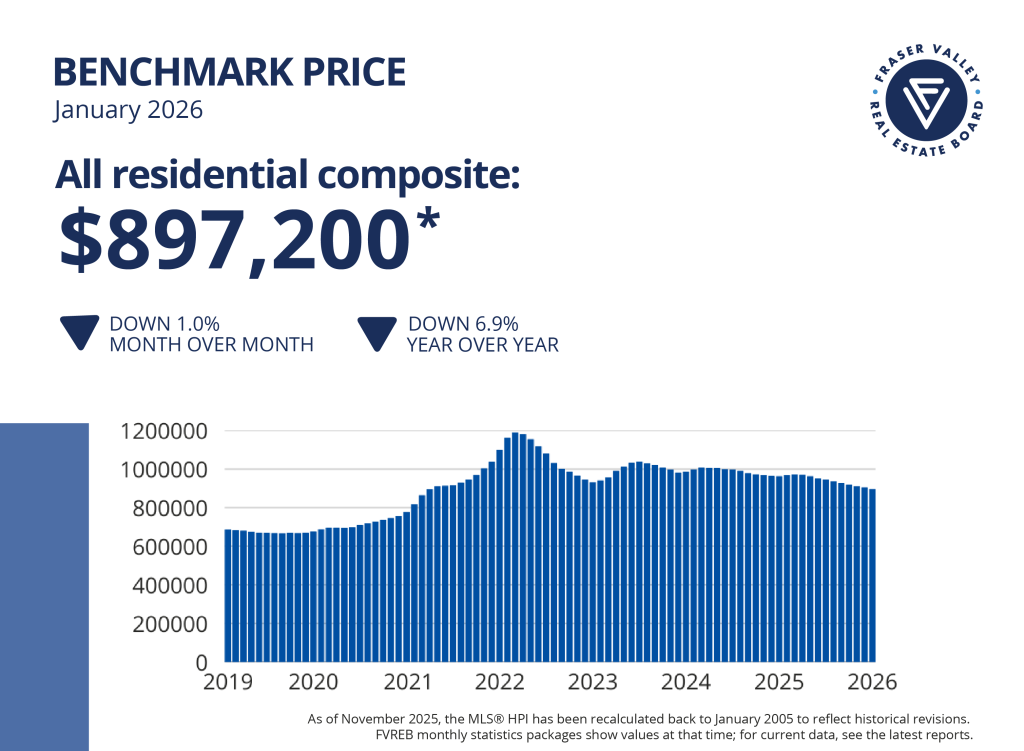
Home prices in the Fraser Valley fell for the tenth consecutive month in January, pushing benchmark prices back below $900,000 for the first time since spring 2021. The composite benchmark price dropped 1% in January to $897,200, down 6.9% compared to this time last year.
Home Sales Remain Well Below Seasonal Norms
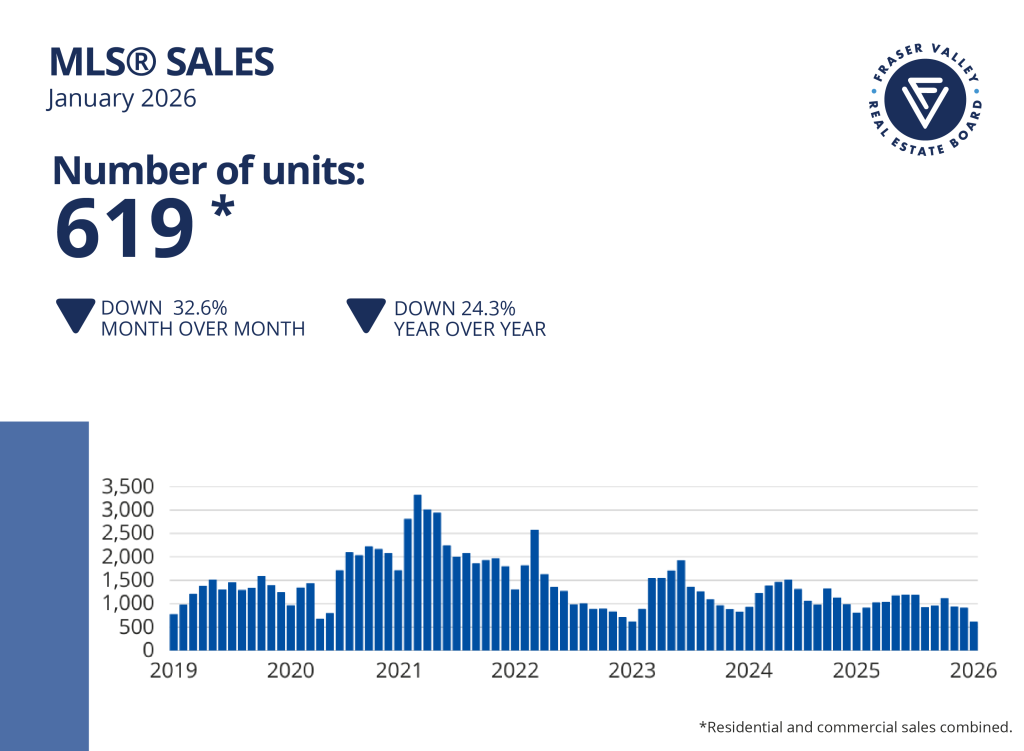
Despite continued price softening, buyers largely stayed on the sidelines. The Fraser Valley Real Estate Board recorded 619 sales in January, down 33% from December and 24% below January of last year.
That puts January sales well below what we would typically expect seasonally, even accounting for the usual winter slowdown. New listings jumped 128% month over month to just over 3,000, which is typical for January. However, listing activity is still running about 10% below last year. Even with that, inventory continues to build.
Active listings rose to 7,711, up 11% from December and sitting 54% above the ten-year seasonal average.
Fraser Valley Remains Firmly in Buyer’s Market Territory
The sales-to-active listings ratio dropped to just 8% in January. As a reminder, the Board considers a balanced market to be between 12% and 20%. At current levels, the Fraser Valley remains firmly in buyer’s market territory.
Benchmark Prices by Property Type Continue to Decline
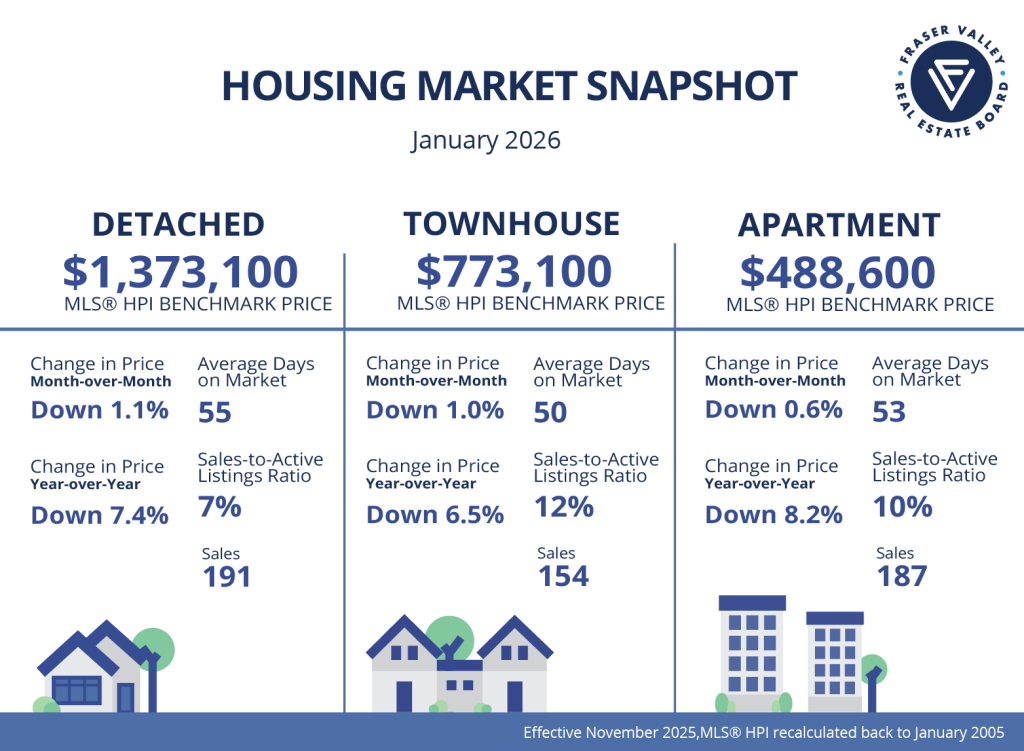
Looking at benchmark prices by property type, downward pressure continues across the board.
Detached Homes
Single-family detached homes now sit at $1,373,100, down 1.1% from December and down 7.4% year over year. Average days on market increased from 51 days in December to 55 days in January.
Townhomes
Townhomes declined to $773,100, down 1% month over month and 6.5% from January last year. Average days on market increased to 50 days in January, up from 43 the previous month.
Apartments and Condos
Apartments fell to $488,600, down 0.6% from December and down 8.2% year over year. Average days on market increased to 53 days in January from 52 in December. Price declines remain orderly, but persistence matters. Ten straight months of declines tells us this is not just seasonal noise.
Average vs Median Days to Sell Tell an Important Story
As always, median days to sell paint a slightly different picture. Detached homes had a median days to sell of 42 days, up from 39 days in December. Townhomes had a median days to sell of 25 days in January, down from 35 in December. Condos had a median of 28 days to sell, down from 36 in December. That spread between average and median tells us some homes, if positioned well, are still moving reasonably efficiently. Townhomes and affordable condos continue to outperform detached homes, while a growing portion of listings sit for extended periods and pull the averages higher.
Sale-to-List Ratios Show Buyers Negotiating Hard
Sale-to-list price ratios reflect the same theme. Detached homes held steady month over month at roughly 96%. Townhomes improved slightly from 97.6% in December to 97.9% in January. Condos remained flat around 97.1%. Buyers are negotiating aggressively, but sellers who price realistically are still able to get deals done, particularly in more affordable segments.
Failed Listings Are Rising in Key Fraser Valley Markets
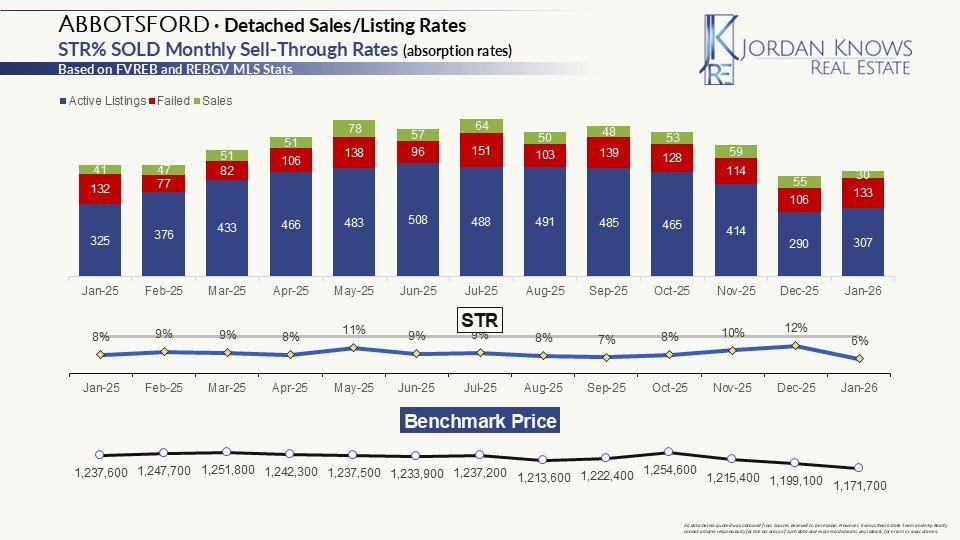
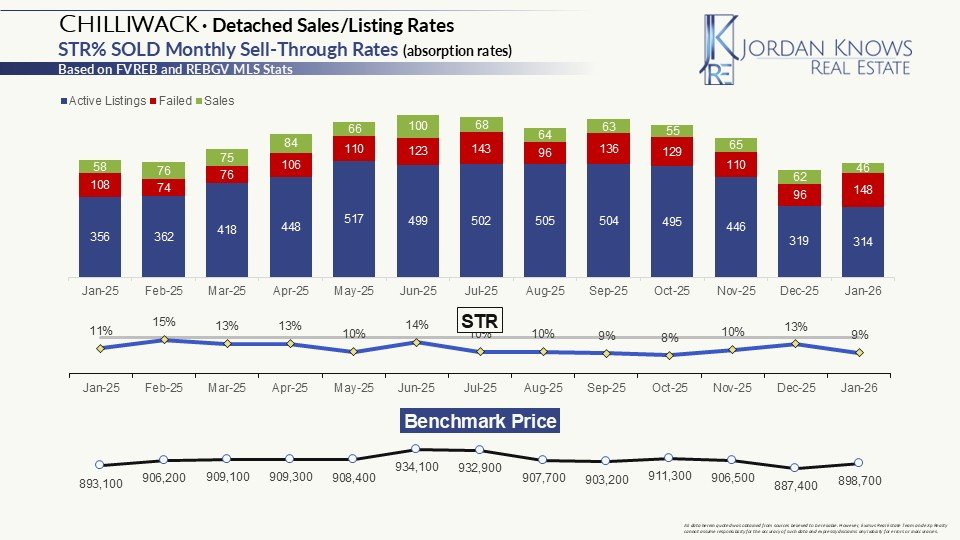
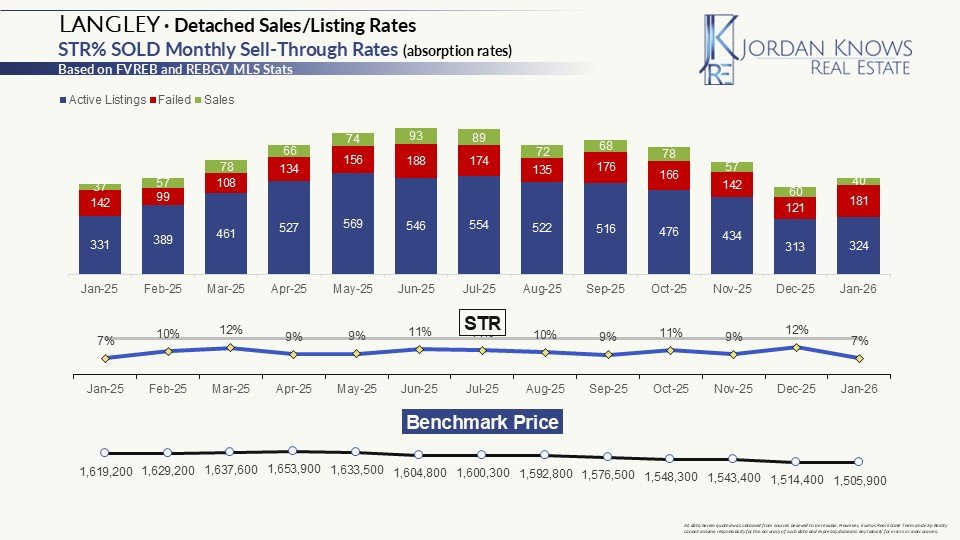
Looking at sell-through rates and failed listings, we are seeing a meaningful shift.
Detached markets in Langley, Abbotsford, and Chilliwack saw roughly a 50% increase in failed and expired listings month over month, alongside a roughly 20% decrease in sales.
Active listings either stayed flat or increased slightly. This suggests many sellers misjudged buyer appetite, pulled their listings, and will likely return to the market repositioned.
The challenge is that buyers are not showing up in sufficient numbers to absorb that inventory. This points to continued inventory growth and additional pricing pressure as we move toward spring.
Buyer Behaviour: More Cautious, More Conditional
Anecdotally, showings picked up briefly toward the end of January. It felt like a wave of motivated buyers shaking off the holidays and getting started. That momentum did not last.
Activity slowed again quickly, which is not unusual for this time of year. Historically, the market tends to stay quiet until March or April. What stands out this year is how cautious buyers remain. Lowball offers are common. Buyers are taking more time, viewing every option, and leaning heavily on conditions. Subject-to-sale offers and multi-property domino scenarios are becoming more common, particularly above the condo segment.
Interest Rates: Bank of Canada Holds Steady
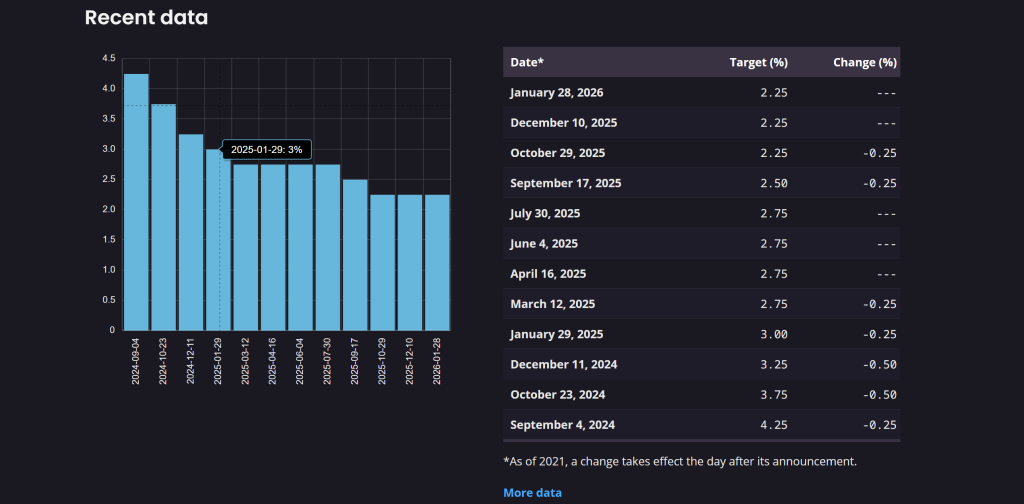
On rates, the Bank of Canada held its policy rate at 2.25% again, marking the second straight hold after earlier cuts in the cycle. In its January decision, the Bank pointed to inflation sitting close to target but emphasized uncertainty in the outlook.
Governor Macklem’s tone has been cautious, focused on confirming inflation continues moving sustainably back to 2%. For borrowers, this matters. Variable rates are unlikely to fall further in the near term, and fixed rates remain supported by bond yields.
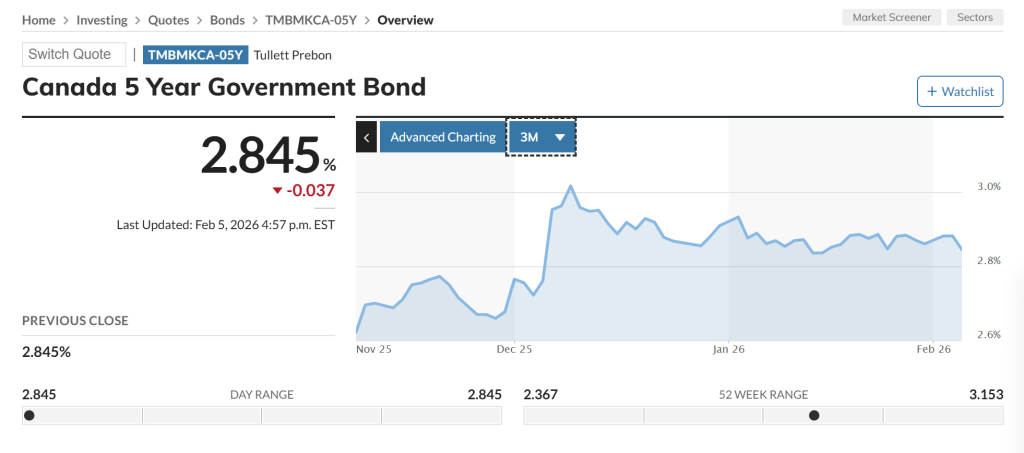
The Canada five-year yield sits around 2.85%, down from late December highs near 3.0%, but still elevated enough that fixed mortgage rates are unlikely to improve meaningfully without another drop in yields.
Labour Market Softness Is Weighing on Confidence
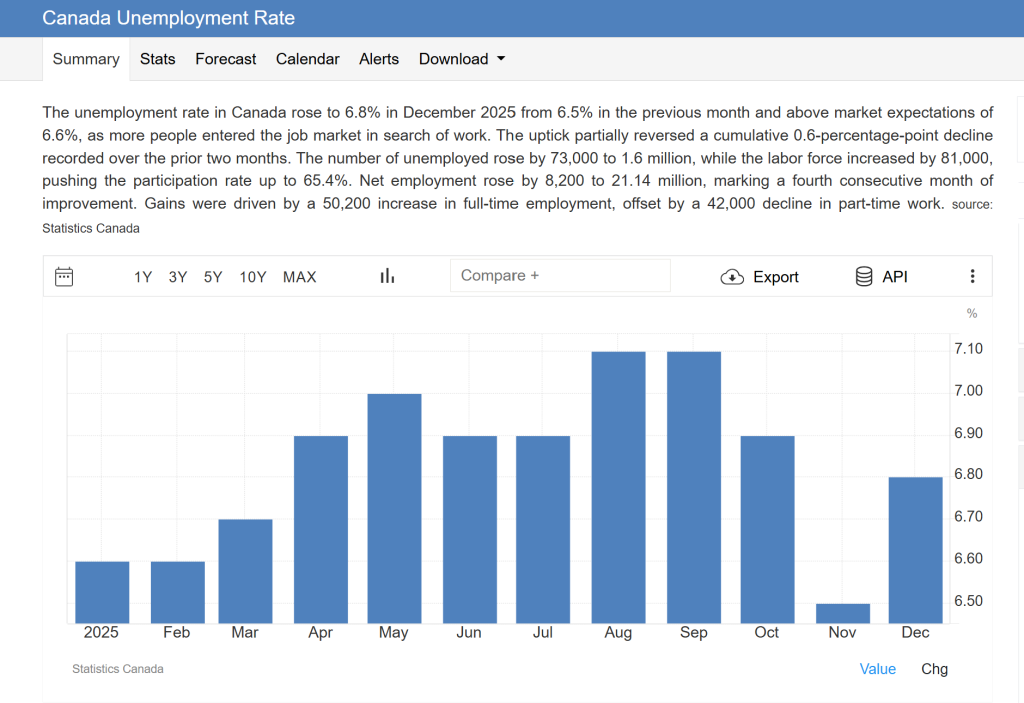
The labour market is not giving a clear all-clear signal. The unemployment rate moved up to 6.8% in December. Youth employment remains soft. Youth unemployment sat at 12.8% in November, a level that directly impacts household formation and first-time buyer demand.
Job growth headlines can be misleading. In several recent months, gains have leaned heavily toward part-time work while full-time employment has been flat to down. That is not a sign of strength. It suggests households are stacking work where possible, which produces caution rather than confidence.
Rising Consumer Credit Stress Adds Another Headwind
On credit stress, delinquencies remain low relative to history, but the trend has been upward, particularly on non-mortgage debt. This does not point to forced selling in the near term, but it does signal a stretched consumer. Stretched consumers do not bid aggressively in housing markets.
Final Thoughts: What This Means for Buyers and Sellers
This market is not broken, but it is under significant strain. We have elevated inventory, falling prices, cautious buyers, and sellers still adjusting expectations.
Optimistic narratives often focus solely on interest rates while overlooking labour market risk and per-capita realities. This does not point to a crash. But it does argue against a fast or broad-based rebound.
If you are buying, you have leverage, time, and choice. If you are selling, pricing discipline and strategy matter more than they have in years. If you want to dig into the numbers by city or property type, visit the market areas page at JKRE.ca, or reach out directly.


