
As we start the new year, it’s a great time to look back at how 2024 shaped up, review where the market stands today, and take a peek at what might be ahead for us in the new year.
Looking Back to the 2024 Real Estate Environment
2024 was a year of contrasts. Despite mid-year interest rate cuts by the Bank of Canada, the Fraser Valley real estate market struggled under the weight of affordability challenges.
The Fraser Valley saw a 10-year high in new listings, with 35,698 properties hitting the market, that’s 9% above the 10-year average.
At the same time, annual sales dropped to a decade low of 14,570, down 24% from the 10-year average.
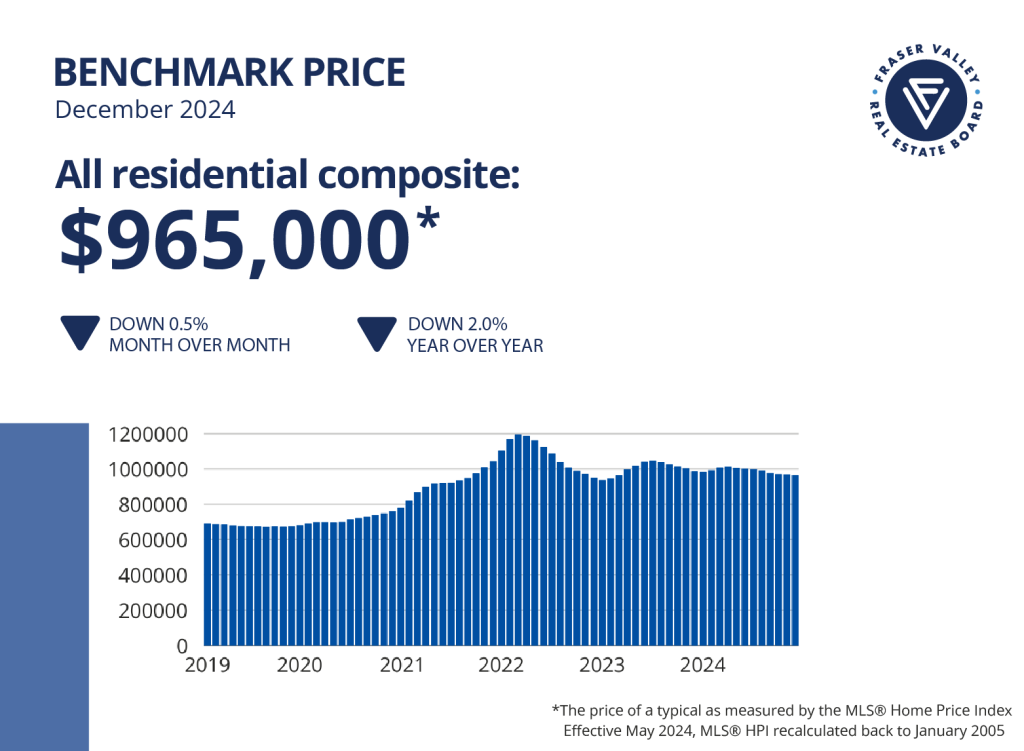
The composite Benchmark home price ended the year at $965,000, reflecting a 4% decline from the market’s March peak and a 2% drop year-over-year.
With numbers like these, the story of 2024 was one of record inventory, muted demand, and a buyer pool feeling the pinch of high borrowing costs.
The City of Surrey led the charge in 2024, accounting for 51% of sales, followed by Langley with 24% and Abbotsford at 15%. As we closed the year, the market remained sluggish, with December numbers reflecting a continuation of these trends.
Sales for December came in at 1,136, down 15% from November but 28% higher than December 2023. Active listings fell 8% to 8,125, as sellers hunkered down for the holidays.
New listings dropped sharply by 26% to 2,367, which is not out of the ordinary for that time of year.
December 2024 Real Estate Numbers
Let’s dive into December’s numbers to see how the year wrapped up across property types.
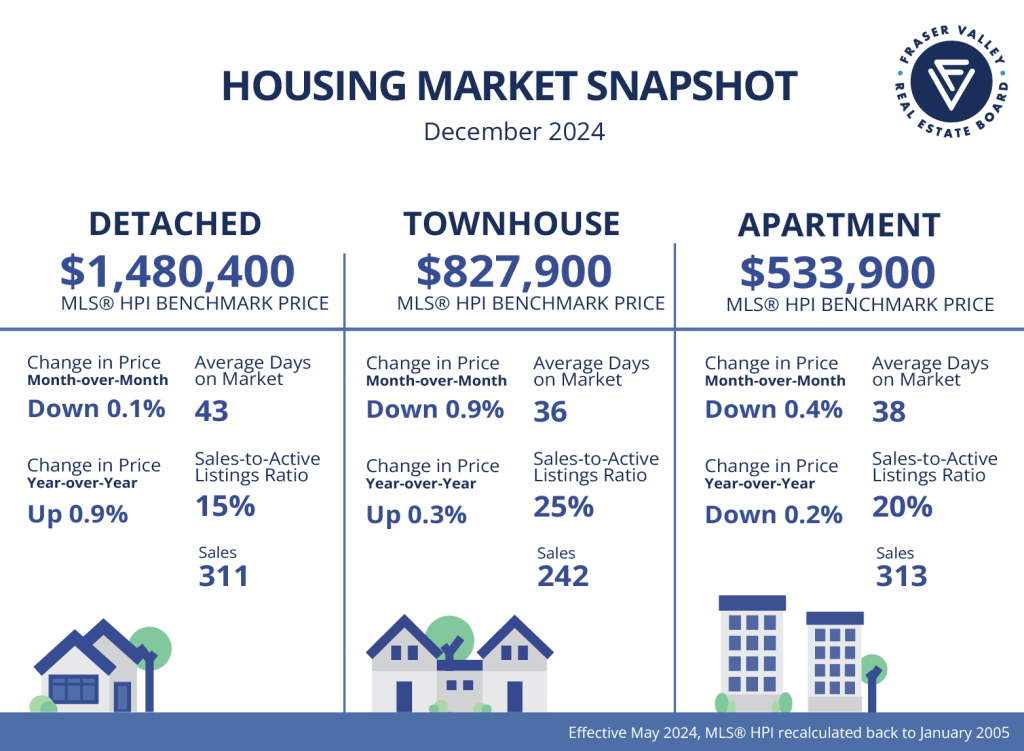
The Benchmark price for detached homes in December was $1,480,400, down 0.1% from November but up 0.9% compared to December 2023.
Detached homes continued to take an average of 43 days to sell, unchanged from November. Townhomes finished the month with a Benchmark price of $827,900, representing a 0.9% decrease from November but a 0.3% increase year-over-year.
On average, townhomes took 36 days to sell, up 3 days from the previous month. Condos saw a Benchmark price of $533,900, down 0.4% month-over-month and 0.2% year-over-year.
Condos spent an average of 38 days on the market, up 2 days from November. While prices continued their nine-month slide, the pace of decline slowed, particularly for detached homes, suggesting we may be nearing a bottom as we head into 2025.
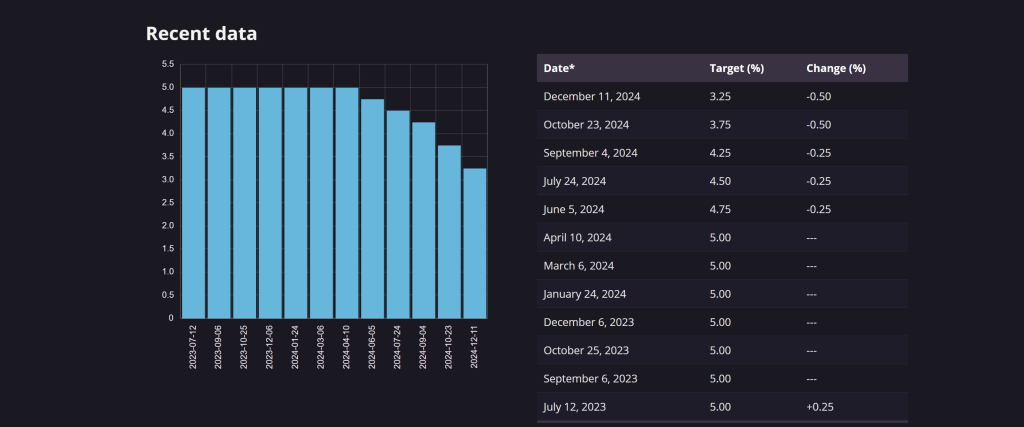
On the lending side, interest rate cuts in 2024 didn’t bring as much relief as buyers had hoped. Starting in April 2024 we saw the overnight lending rate fall 1.75%. Fixed rates remained between 4% and 4.5%, with 5-year bond yields stabilizing around 2.92% in December.
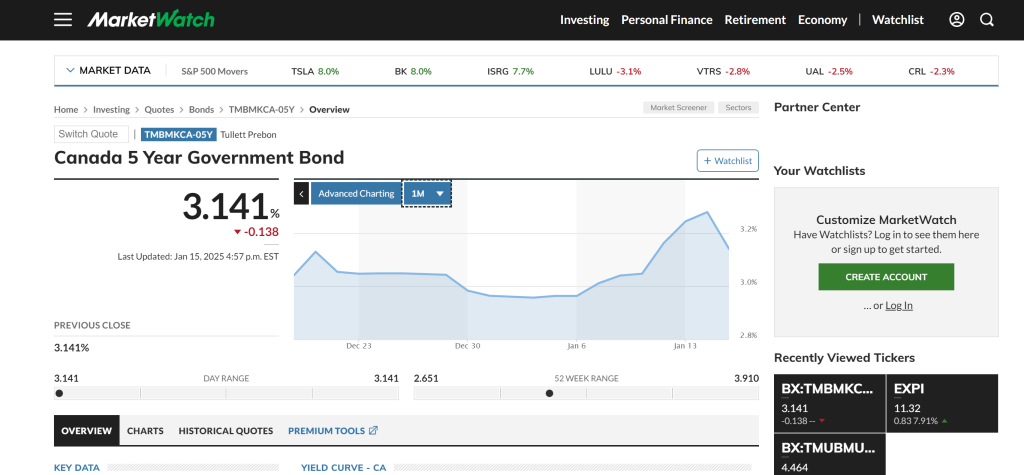
Variable rates hovered at 5.75%, making fixed products the more attractive option for most buyers. For buyers, this means affordability remains challenging. But for those who act quickly, there’s still an opportunity to secure deals before rates fall enough to spur increased competition. Both fixed and variable rates are expected to trend downward through 2025, with significant relief likely by mid-year as bond yields continue to drop.
Anecdotally, I’ve already seen a marked increase in market activity, and had to compete with a buyer client on a condo that had previously been listed for months with no action.
In the same vein, listings of mine that were quiet last month have had much higher levels of interest. It’s a little early in the year to say whether that’s just some rollover demand from the holiday season, or buyers trying to beat the low rate rush. We’ll have to wait and see.
Economic Outlook 2025
Canada’s economic landscape paints a mixed picture for 2025. GDP growth slowed to just 0.7% in the fourth quarter of 2024, while unemployment rose to 7.4%, driven by losses in construction and manufacturing.
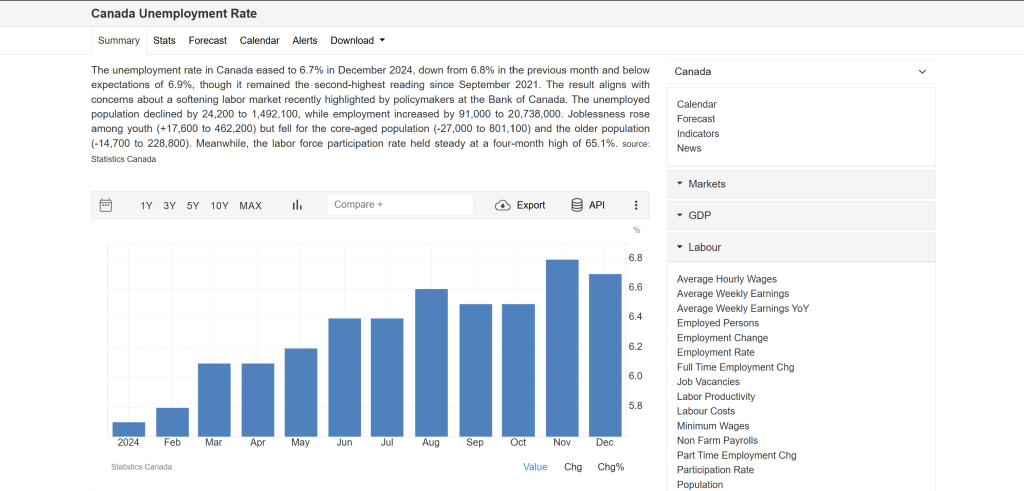
Potential U.S. tariffs on Canadian lumber and steel loom large, threatening to push construction costs higher and slow new housing starts further. This economic backdrop, combined with lingering inflation, suggests that affordability challenges will remain a central theme in the real estate market for the foreseeable future.
2024 also brought several key changes to federal and provincial regulations impacting buyers, sellers, and landlords alike.
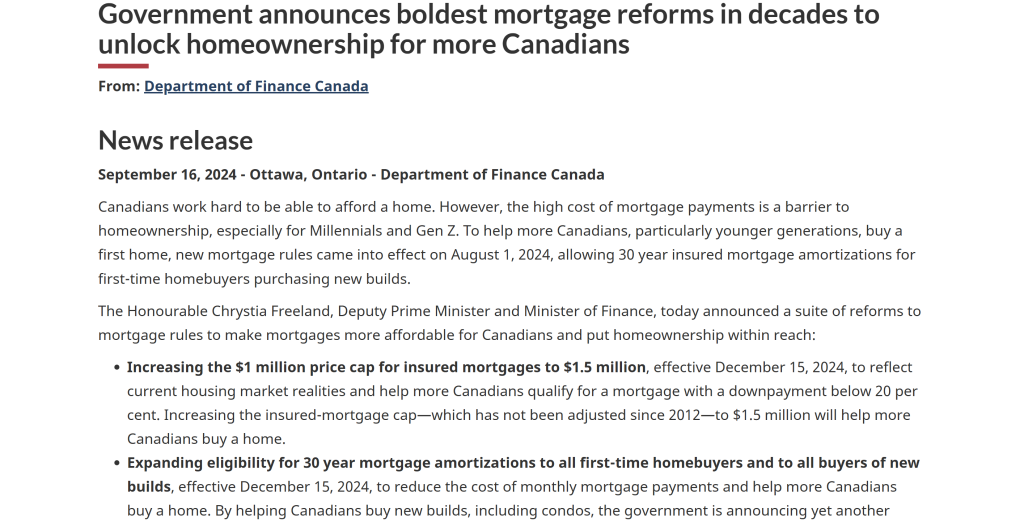
The CMHC now allows insured mortgages up to $1.5 million and has extended amortizations up to 30 years for first-time buyers.
While this gives buyers more borrowing power, it also increases overall debt and interest costs over the life of the loan. Additionally, purchasers of new constructions can now opt for 30-year amortization periods, extending beyond the previous 25-year limit.
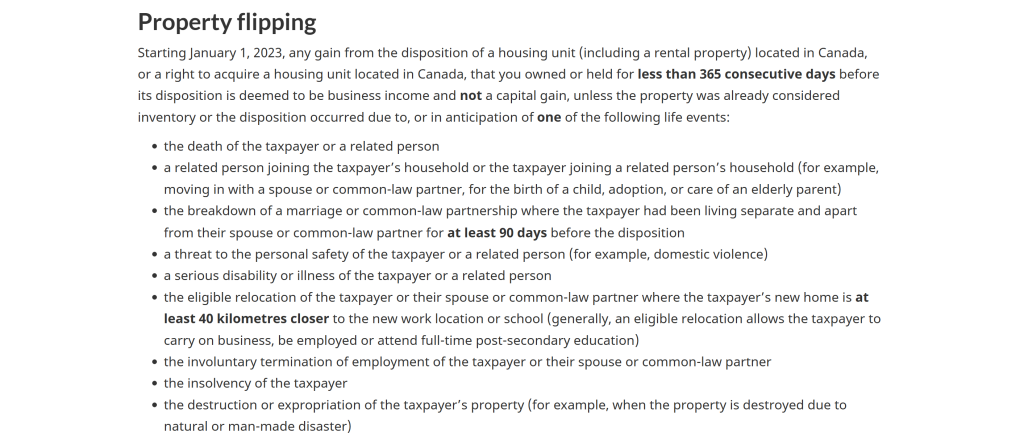
A new federal flipping tax was introduced, targeting residential properties sold within 12 months of purchase.
Unlike traditional capital gains, profits from these transactions are taxed as business income, which is fully taxable. While there are exemptions for significant life events such as divorce, death, or disability, the tax is designed to curb speculative activities in the real estate market.
In British Columbia, as of January 1st, this federal measure is now reinforced by a new provincial flipping tax targeting residential properties sold within two years of purchase.
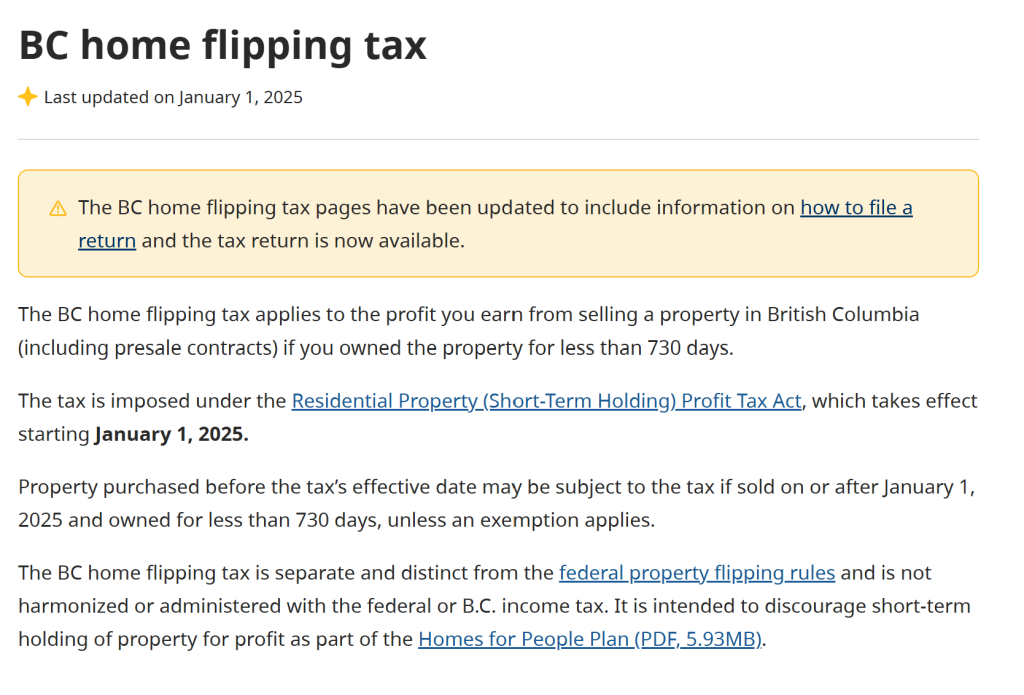
This provincial tax applies not only to sales but also to assignments of purchase contracts, further discouraging speculative flipping activity. Together, these taxes are being pitched as a layered deterrent to short-term property speculation, with the federal tax addressing rapid flips under one year and the provincial tax extending the timeline to two years.
They’re hoping this tandem approach will stabilize prices by reducing the frequency of speculative transactions, though it will also punish some legitimate buyers who need to sell within a short timeframe due to unforeseen circumstances, while potentially reducing supply as Sellers choose to hold their properties longer to avoid the tax.
Changes to the Residential Tenancy Act in British Columbia have also added new complexities to the market. Buyers must now provide tenants with three months’ notice if notice is given before possession, or four months if given after possession. These changes aim to balance tenant protections with ownership rights but have made selling and purchasing tenanted properties more challenging, particularly for investors and landlords looking to occupy or renovate properties.
The federal ban on foreign residential property purchases, originally set to expire in December 2024, has been extended through January 2027, further limiting foreign demand in markets like the Fraser Valley. Another significant federal change allows for easier lender switching upon mortgage renewal. Borrowers seeking a “straight switch,” meaning they are changing lenders without altering the loan amount or amortization period, are now exempt from the Minimum Qualifying Rate stress test. This provides greater flexibility for homeowners to secure better terms at renewal without facing additional qualification hurdles.
Collectively, these changes reflect an effort by policymakers to address housing affordability, discourage speculative investments, and provide more options for buyers and homeowners. They also introduce new complexities that buyers, sellers, and investors must navigate carefully to avoid unexpected tax or regulatory burdens. They will also likely lead to negative unforeseen consequences. The tandem flipping taxes in particular will require extra attention, as the overlapping timelines could result in compounded tax obligations for some sellers.
Lastly, the CRA has also announced they will be collecting tax on capital gains at the proposed inclusion rate of 2/3rds rather than half for all corporations, and any Canadian earning $250,000 or more in capital gains. This is despite that legislation not receiving royal assent before it essentially died when parliament was prorogued earlier this month. How CRA can just collect more tax without a mandate is beyond me, and it’s already causing headaches for clients of mine that sold investment properties recently. Stay tuned for how this plays out.
I’ve made my opinion on the above pretty clear, as they were announced through the year, so there’s no use beating a dead horse but while I see lots of extra tax, regulatory headache and hurdles, I don’t see much being done to streamline construction and reduce the supply side imbalance that contributed to the current affordability crisis in the first place. Remember, the Property Transfer Tax was pitched as a method of curbing speculation, all the way back in 1988. It didn’t work, as most of them never do, and they often evolve into predatory tax schemes that punish normal Canadians trying to go about their lives and business.
In my nearly decade-long career as a Realtor I’ve seen endless new regulations and taxes stacked up, all with the stated intention of “fixing” the housing market. None of them have worked so far, but hey, what harm could another tax do, right? At the very least, an ever more complex real estate market gives me job security, and something to complain about.
Looking ahead, I anticipate a cautiously optimistic 2025. The first half of the year may remain subdued as buyers and sellers adjust to ongoing affordability challenges. However, as rates drop and economic pressures ease, we could see renewed activity by mid-year, especially in more affordable property types like condos and townhomes.
2025 is shaping up to be another dynamic year in Fraser Valley real estate. Whether you’re looking to buy, sell, or invest, staying informed and acting strategically will be key. As always, I’m here to help you navigate the market and make the best decisions for your unique situation. Have questions or want to discuss your real estate goals? Give me a call, and let’s make 2025 your year.


