
Rate Cut Hopes Grow, But Buyers Still Holding Back
Despite whispers of interest rate relief from the Bank of Canada, the Fraser Valley real estate market remained quiet in April.
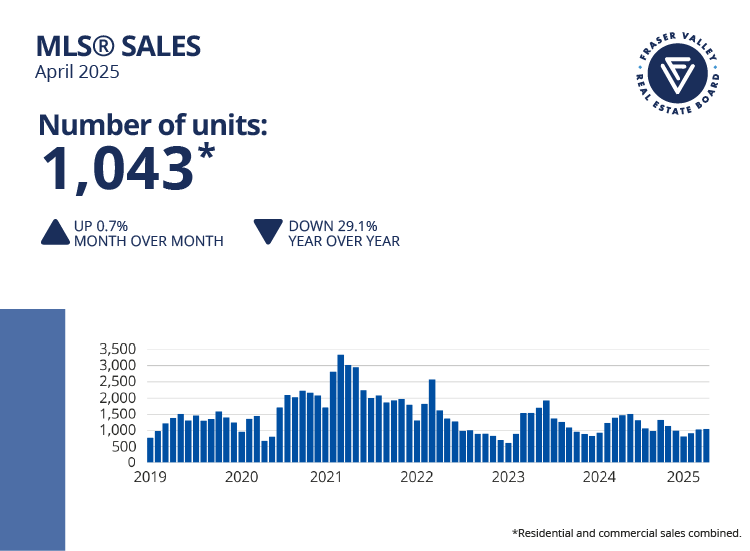
Sales crept up just 1% from March to 1,043 transactions, but were still down 29% compared to this time last year. Inventory surged to over 10,000 active listings, a level we haven’t seen in more than a decade, giving buyers time, selection, and negotiation leverage.
The trouble is, buyers aren’t rushing in. Typically, the Spring market(April, May, early June) is the busiest time of the year sales-wise. The momentum gained during the spring usually insulates price points through the slower Summer months. Without the Spring momentum, we may see a slower Summer, and further price erosion.
The overall sales-to-active listings ratio now sits at 10%, firmly in buyer’s market territory. The board considers the market balanced with the ratio sits between 12-20%.
Benchmark prices have started to erode, albeit gradually: detached homes are down 1.3% year-over-year, townhomes down 2.4%, and condos down 3.2%. If sentiment continues to slip, we could see a more aggressive race to the bottom, similar to what happened in Spring 2022. It’s not there yet, but the cracks are showing.
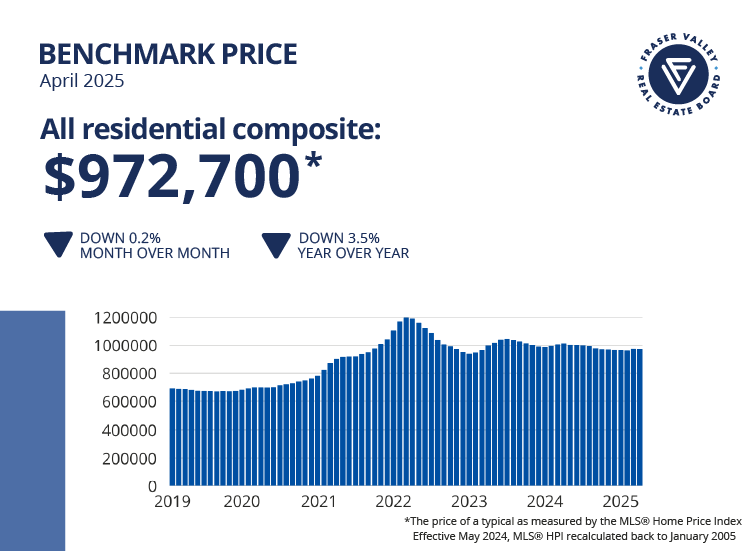
The composite Benchmark price in the Fraser Valley fell 0.2% in April, to $972,700.
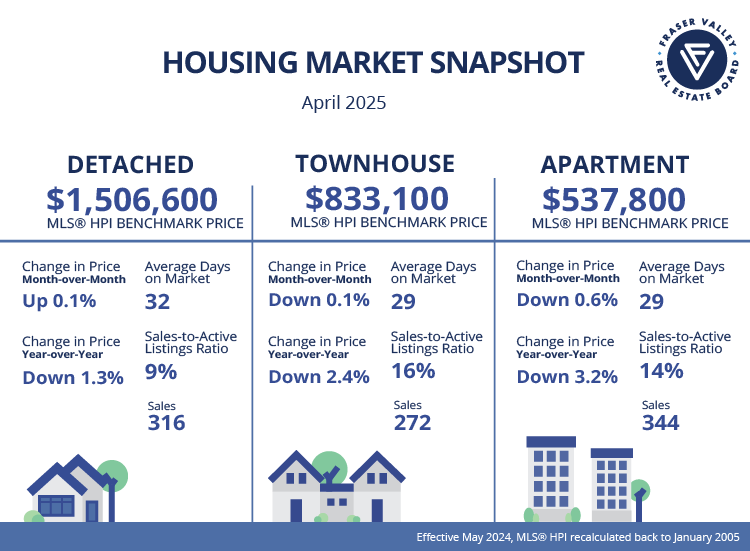
Looking at HPI benchmarks by property type
● Single Family Detached: actually increased $1,506,600, up 0.1% compared to March 2025, however that’s still down 1.3% compared to this time last year
● Townhomes: fell to $833,100, down 0.1% compared to March 2025 and down 2.4% compared to April 2024.
● Apartments: fell to $537,800, down 0.6% compared to March 2025 and down 3.2% compared to April 2024.
Despite the slowdown, good listings priced right are still moving. The median days to sell in April were 14 for detached (vs. 32 average), 13 for townhomes (vs. 29 average), and 19 for condos (also vs. 29 average).
So while it’s taking longer on average, homes that are perceived as strong value are still attracting quick offers. The issue? Fewer of those “deals” are being picked up.
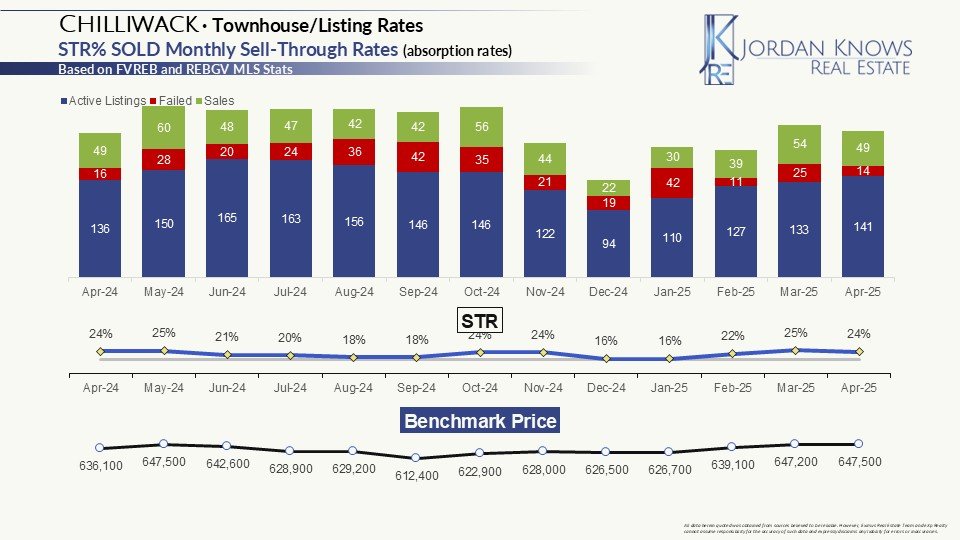
Chilliwack townhomes continue to lead the way with a strong 24% sell-through rate (down slightly from March).
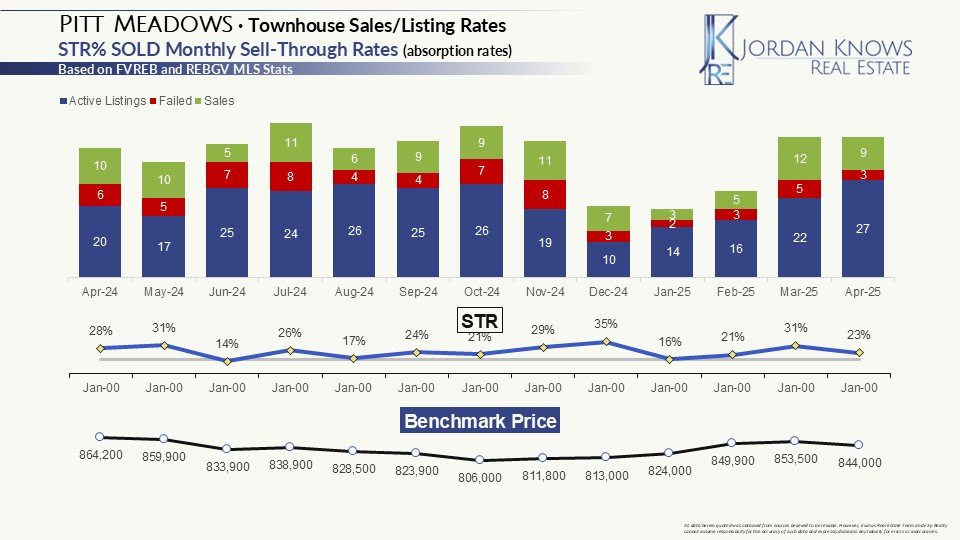
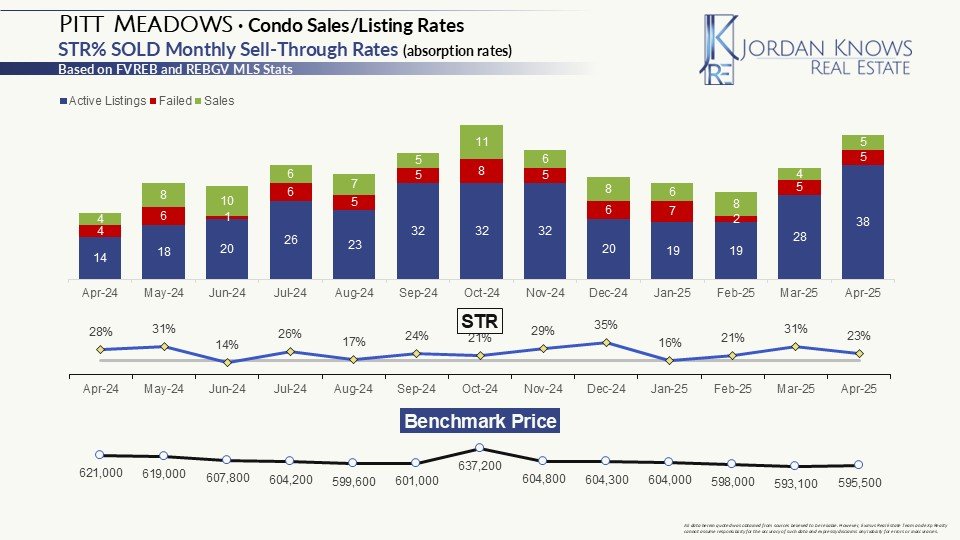
Pitt Meadows is still showing seller’s market conditions for attached product. Most other attached home markets are sitting in balanced territory. Detached homes, however, are sluggish almost across the board.
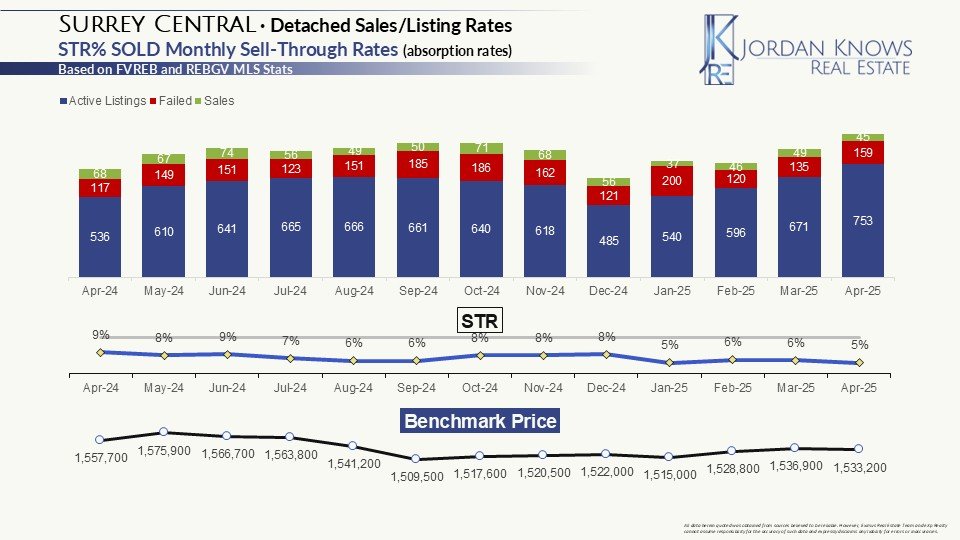
Surrey Central, for example, has a detached sell-through rate of just 5%.
This matters. If you’re selling a condo or townhome and moving up to a detached home, the market is on your side. The inverse though, is trickier. This divergence is impacting homeowner strategies across the Valley. If you’d like to see breakdowns by city and property type, check out the market areas page.
Anecdotally, we’re starting to see a wave of relists, sellers who didn’t get traction in March or April, pulling their homes, adjusting expectations, and coming back to market. If these sellers begin pricing to be the first to sell, rather than holding out, downward pressure could accelerate. At the same time, falling interest rates might provide some support if the Bank of Canada continues on a dovish path. The next rate announcement is June 4th, and I’m betting on a 0.25% drop, but I suppose we’ll have to wait and see.
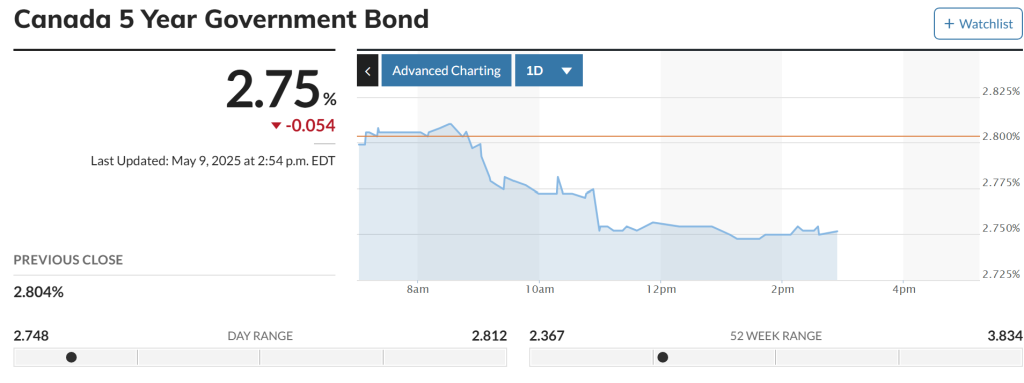
5 year bond yields have spiked slightly, at time of writing/recording they sit around 2.75%, so I don’t expect any relief on fixed rates coming anytime soon.
All that being said, the soft sales numbers aren’t just about rates or inventory, they’re about confidence.
In March, Canada lost 33,000 full-time jobs, pushing the unemployment rate to 6.7%. Surveys show consumer confidence slipping, and many households are hesitating to make large financial moves.
Adding to the uncertainty, the Liberals won a fourth consecutive term in April under new leader Mark Carney. While Carney’s leadership was positioned as change, ~88% of his cabinet is made up of returning Trudeau-era ministers. 12% change is something, but I don’t personally feel it’s nearly enough. Policies like emissions caps, increased carbon taxes, and a projected $62 billion federal deficit in 2025/26, an additional $130 billion in deficit spending over 4 years, all remain in play.
RBC notes that 80% of Canada’s GDP growth in recent quarters came from government spending, a level of dependence that economists warn is unsustainable.
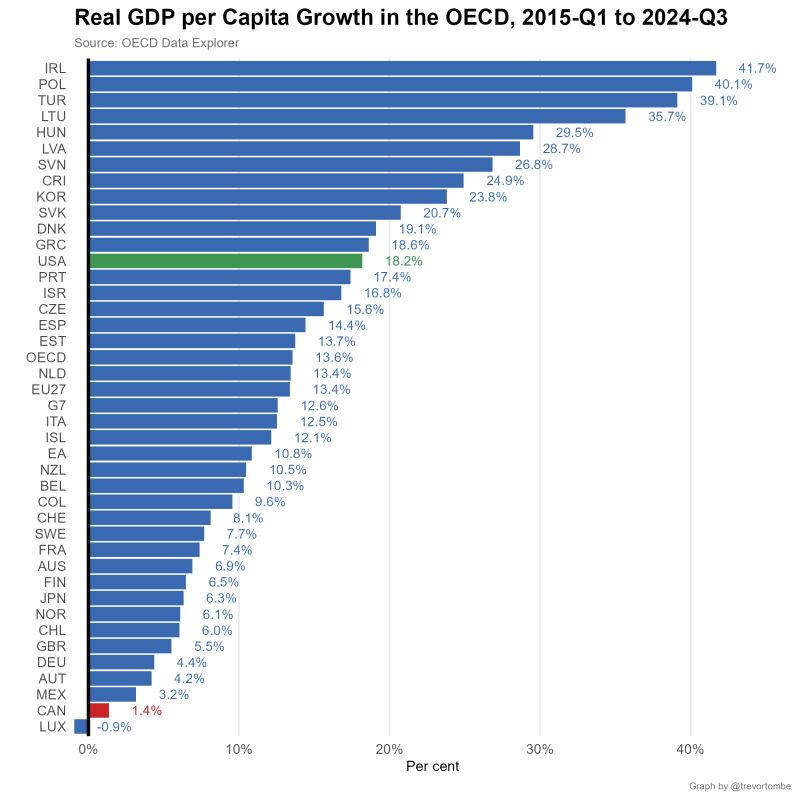
Meanwhile, Canada ranks near dead last in the OECD for GDP per capita growth over the past decade. This erosion of prosperity is showing up in sentiment. An Angus Reid survey found nearly 4 in 10 new immigrants are considering leaving Canada, citing cost of living and lack of opportunity.
So Where Does That Leave Us?
Locally, we have record inventory, softening prices, and a tale of two markets depending on property type. Nationally, we have stagnant growth, rising job losses, and policies that could spook both investors and residents. Rate cuts might provide some short-term lift, but without restored confidence, that may not be enough.
As always, it’s critical to understand the dynamics in your specific market segment. If you’re selling a detached home in a slower area, you may need to be aggressive on pricing. If you’re looking for a turn-key property in a hot attached segment, expect competition.
What do you think? Are we heading toward a deeper correction, or will the Bank of Canada pull us out in time? Do you think continued deficit spending and regulatory expansion will help or hurt the market long-term?
Drop me a message or comment, I’d love to hear your take. And if you’re thinking about making a move, now or down the line, let’s chat about your options.


